What should be checked before replacing a driveway?
A driveway review should confirm property limits, municipal boulevard and curb requirements, width, parking layout, garage elevation, sidewalk crossing, drainage, utilities, trees, access, and the condition below the existing surface. A wider or relocated entrance may require municipal approval. Water should not be redirected onto neighbouring property or trapped at the garage. Removal can reveal soft soil, buried rubble, shallow services, or an old base that cannot support new concrete. Measuring only the visible area misses these risks. The owner should also identify vehicle types, snow storage, future gates, and desired finish. Professional assessment turns those facts into a scope for demolition, disposal, excavation, granular base, forms, thickness, reinforcement, joints, finishing, curing, and restoration. Correcting layout and drainage before placement is far less costly than cutting a new channel or rebuilding a low area after the concrete hardens.
Why do excavation and compaction matter for a driveway?
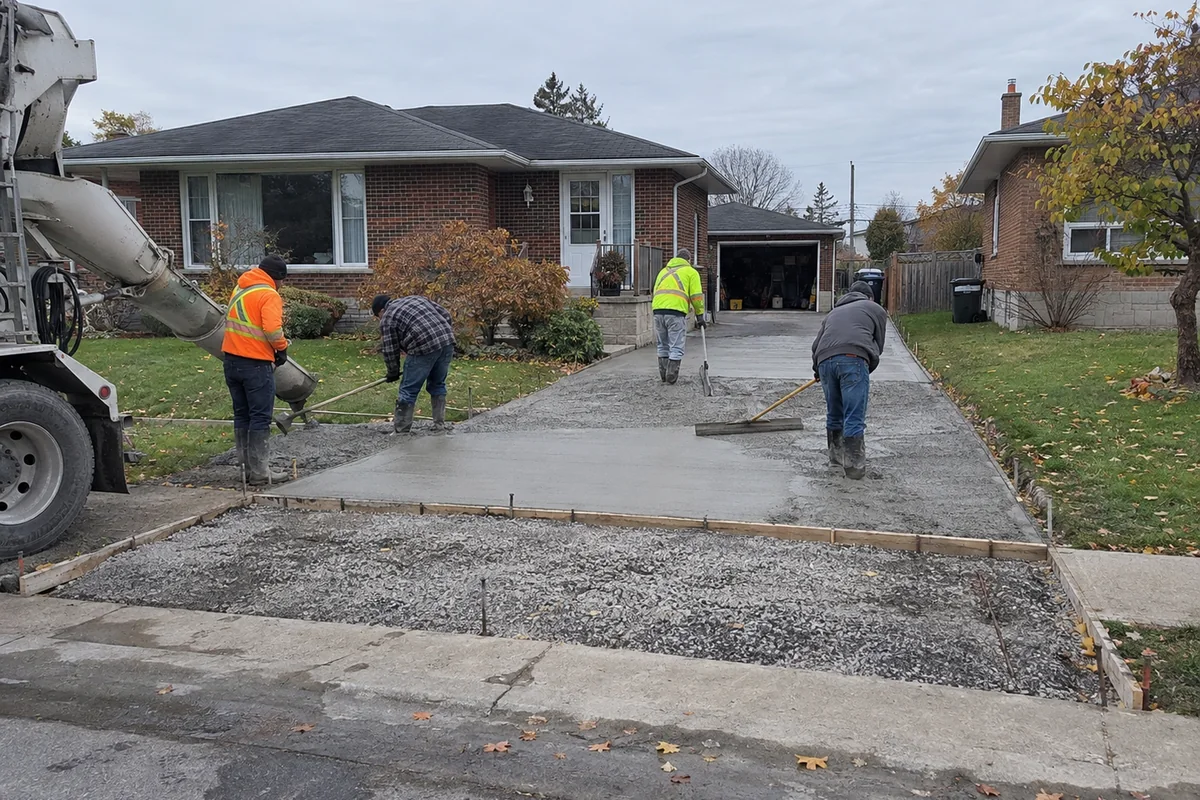
Driveway concrete needs uniform support under vehicle wheel paths and at edges. Topsoil, wet clay, roots, loose fill, and poorly compacted utility trenches can settle, leaving the slab to bridge unsupported areas until it cracks or drops. Excavation removes unsuitable material and provides room for the specified concrete and granular base. The base is placed and compacted in lifts, with attention to garage slabs, sidewalks, curbs, and service trenches. Water should be managed before concrete covers the work. A thick slab over a weak pocket is not the same as a properly supported slab. Delaying base correction until movement appears means lifting, injection, or replacement may be needed. Professional preparation checks elevations throughout the area and protects the compacted surface from rutting or heavy rain. Stable support gives joint planning and reinforcement a chance to work as intended.
How are driveway thickness, reinforcement, and joints selected?
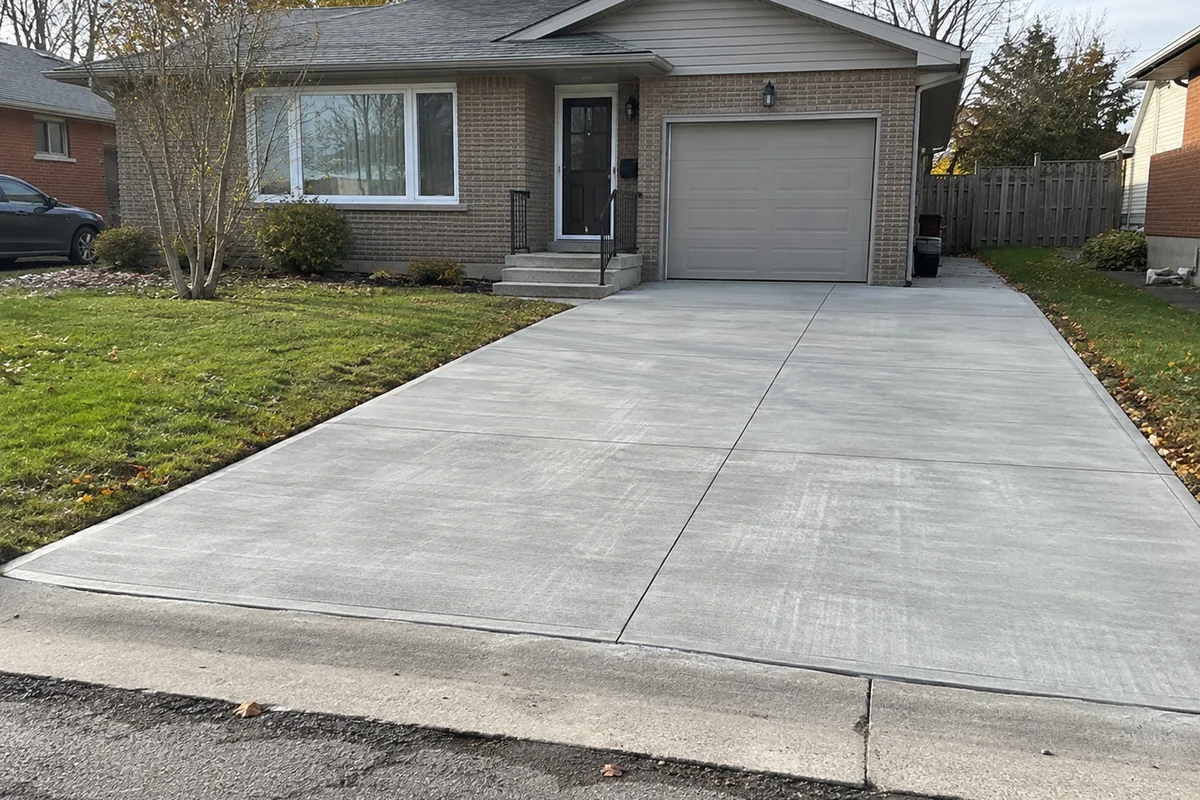
Driveway details depend on vehicle weight, base support, panel size, edges, garage and sidewalk transitions, and local requirements. Passenger vehicles impose different loads from delivery trucks, recreational vehicles, or commercial vans. Reinforcement can help keep cracks tight, but it must be supported in the correct position and does not replace adequate thickness or base preparation. Control joints divide the slab into reasonably shaped panels and encourage shrinkage cracks to occur along planned lines. Isolation joints separate the driveway from fixed structures where movement differs. Random cracking becomes more likely with long narrow panels, inside corners, late cuts, or abrupt thickness changes. The scope should show the intended panel pattern and how new concrete meets the curb, sidewalk, garage, and existing paving. Correct details and execution manage normal concrete movement while supporting the vehicles that will actually use the driveway.
Which driveway finish works best through Niagara winters?
A driveway finish should provide practical traction in rain and snow while remaining maintainable. A broom finish is common because its texture improves grip. Exposed aggregate and decorative treatments can change appearance, texture, sealing needs, and winter maintenance. Smooth or heavily sealed surfaces may become slippery in certain conditions. The owner should view realistic samples and understand that colour varies with materials, weather, curing, and age. Exterior durability also depends on the concrete mixture, finishing timing, air entrainment where specified, curing, and drainage. Applying de-icing chemicals too soon or allowing water to sit can damage a young surface. A finish cannot compensate for a weak base or wrong slope. Professional placement balances texture and appearance with vehicle use, snow clearing, runoff, and the exposure the driveway will face every winter.
When can vehicles use a new concrete driveway?
A new driveway needs time to cure and gain enough strength for vehicle loading. The safe opening date depends on the concrete, weather, slab design, curing, and vehicle weight. Walking on the surface and driving a heavy vehicle are different loading conditions. Parking or turning too early can mark the finish, damage edges, or crack areas that have not developed adequate strength. The contractor should provide clear instructions for pedestrian access, form removal, passenger vehicles, heavy vehicles, sealing, and winter care. Barricades should remain until the release point rather than being moved for convenience. Curing methods also need protection from pets, landscaping work, deliveries, and irrigation. Following the handover guidance is one of the simplest ways an owner can protect a new driveway after the placement crew leaves.
Discuss your project
Share the location, scope, timing, and any site conditions that may affect the work.